No Kit, No Commitment: Six Sutton Clubs That Will Let You Just Turn Up
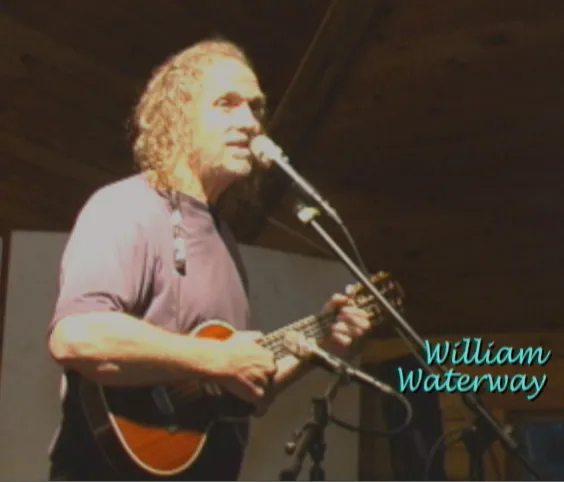
Photo: Williamwaterway, CC BY-SA 3.0, via Wikimedia Commons
Everyone says they'd like to join a club. Almost nobody does, and the reason is nearly always the same: the fear of walking into a room where everybody already knows each other, standing awkwardly by the door, and being quietly assessed.
So we asked six Sutton Coldfield groups a nosy question. What actually happens, minute by minute, when someone new turns up? What does it cost? And what are the little rituals that make a room feel open rather than closed?
Here's what came back.
Monday: the ukulele group that hands you an instrument
Half past seven, a church hall in Boldmere, and the first thing you'll notice is the noise — a dozen ukuleles being tuned at once, which sounds like a flock of small, cheerful birds.
'We keep four spare ukes in a cupboard and a laminated sheet of four chords,' says Margaret, who runs the tea rota and is therefore the most powerful person in the room. 'Nobody plays anything on their first night except those four chords. That's the whole induction.'
The ritual: a tuning-up period that doubles as a gossip session, then forty minutes of playing, then a break with a brew and a biscuit tin that operates on an honesty system. Cost is around £3 a session, no membership form. Turning up alone is the norm — Margaret reckons about half the group arrived that way.
Wednesday: chess at a café table
Mid-morning in Mere Green, and a café has quietly set aside two tables for anyone who fancies a game. No clocks, no grading, no ladders.
'We run a slow table,' says Dev, who has been organising it for years. 'If you've never played, or you played at school and remember nothing, you sit at the slow table and someone talks you through it. Nobody at the slow table is being judged. That's the deal.'
Cost: the price of a coffee. The etiquette is simple — you turn up, you put your name down on a pad, you get paired with someone roughly at your level. The small ritual that makes it work is that the organiser always plays the first game against a newcomer, which gives everyone an easy exit if it turns out not to be their thing.
Thursday: a choir with no audition and no sheet music
A community choir in the Four Oaks area, Thursday evenings, and the word that keeps coming up in conversation is 'unhurried'.
'We don't read music, we don't audition, and we learn everything by ear,' says one long-standing member. 'The first session is free because we know people want to try before they commit. You stand at the back, you mumble, and by week three you're singing the harmony without noticing.'
The ritual: everyone arrives ten minutes early and nobody sits down. Newcomers are introduced to the person standing next to them rather than to the whole room, which is a deliberately low-stakes way of doing it. Drop-in rate is around a fiver.
Saturday: the beginners' running group
Eight forty-five on a Saturday morning near Wyndley, and this is the one people are most nervous about — the word 'running' does a lot of intimidating work.
'We run-walk. We say that at the start of every single session,' says the group leader. 'We have a back marker whose only job is to stay with the slowest person. Nobody gets left behind, ever. That's not a nice-to-have, that's the rule.'
No kit required beyond trainers you can move in. Sessions are free, the routes are loops so you can duck out early, and the post-run coffee is treated as a non-negotiable part of the schedule. Turning up alone is, again, completely standard.
Sunday: board games in a back room
Early afternoon in a Wylde Green pub, and there is a table set aside with a sign on it that says 'learn a game here'. That sign is the entire welcome strategy, and it works.
'A lot of people's experience of board games is Monopoly at Christmas, which has put them off for life,' says one of the organisers. 'So we keep a shelf of things that take fifteen minutes to teach. You sit down, someone explains it twice, and off you go.'
A couple of pounds in the tin covers the room. The ritual is that the first game of the afternoon is always a short, silly one, so nobody's first impression is a two-hour strategy epic.
Monthly: the history society talk
Once a month, a hall in the town centre, a folding table with cake, and a speaker on everything from medieval boundaries to twentieth-century shopfronts.
'Visitors pay a few pounds on the door and we make a point of not asking them to sign anything,' says a committee member. 'If you come three times and never join, that's absolutely fine. We'd rather you came.'
The chair opens with two minutes of notices, then the talk, then questions, then tea. The cake rota is taken extremely seriously and is, by common consent, the reason attendance holds up in January.
The things that make a difference
Across all six, the same small courtesies came up again and again.
- Somebody meets you at the door. Not a committee, not a form — one person whose job is to say hello and point at a chair.
- A first session that's free, or nearly free. Nothing kills curiosity faster than a joining fee before you've heard a single note.
- A named slow lane. The slow table, the back marker, the four-chord sheet. Beginners relax when they can see where they fit.
- A job you can be given. Stirring the tea, moving a table, holding the pad. Being useful is the fastest route from stranger to regular.
- An easy exit. Nobody is chased up if they never come back. Oddly, that's what brings people back.
If you're going to try one
Pick the one that frightens you least, not the one that sounds most impressive. Go once, with no intention of returning, and let yourself be bad at it. Bring nothing. And if you're hovering in a doorway wondering whether you've got the wrong room — you haven't; you're just early, and someone is about to hand you a mug.