The Short Way Round: A Back-Lane Walk Through Sutton Coldfield
Photo: Orf3us, CC BY-SA 4.0, via Wikimedia Commons
Every town has a front route and a back route. The front route is the one we show visitors: the Parade, the High Street, the good shop windows and the crossing points where everyone waits. The back route is the one we actually use. It is the service lane behind the shops, the footpath between two estates, the gap in the wall that saves you four minutes and one awkward conversation.
Sutton Coldfield has plenty of these thin routes. They are not secret, exactly. They are just unnoticed. So on a dry afternoon in 2026, I went looking for them — not to uncover anything dramatic, but to follow the seams of the town and listen to the people who wear them smooth.
Why the thin routes matter
A back lane is rarely beautiful in the postcard sense. It has wheelie bins, fire escapes, a drain that needs a word with itself. But it is useful, and usefulness has its own charm. These routes connect car parks to counters, estates to schools, bus stops to back doors. They are the town’s shortcuts, and shortcuts are a form of local knowledge.
“The front door is for customers,” a florist on the High Street told me, lifting a bucket of stems out of the way. “The back lane is for the day. Deliveries, rubbish, a quick breath. Everyone who works here knows it.”
A retired postman I met near Mill Street put it more simply. “People think a town is its main road. It isn’t. It’s the little ways through. That’s how you know you belong — when you stop looking for the sign.”
Start behind the shopfronts
Begin at the top of the Parade, near the Town Hall, and walk down towards the High Street. Before the shopfronts get busy, find the service lane that runs behind them — the one with the delivery crates, the painted back doors and the occasional chair left out for a staff break. This is not a tourist route. It is a working route, so keep left, keep moving and don’t block the bins on collection day.
Look up as you go. The brickwork changes every few metres: soot-darkened patches, a blocked doorway, a window that has been bricked in and painted over so many times it looks like a scar. There is history here, but it is not labelled. It is the ordinary history of stables, stores and small workshops that once needed a rear entrance and still do.
The Mill Street handshake
Cross Mill Street at the proper crossing and pick up the footpath that slips between buildings towards the car parks behind Anchorage Road. This is the commuter’s corridor: office workers, shop staff, parents with buggies, teenagers moving in that loose, unhurried way that suggests they have nowhere to be and everywhere to be at once.
A café worker on her break told me she uses it every day. “It’s not faster, exactly. It’s quieter. You get thirty seconds where nobody wants anything from you.”
That is the secret of a good cut-through. It is not only about distance. It is about the small mental shortcut: the moment the main road falls away and the town becomes a series of walls, hedges and painted doors.
Where the estates meet the park
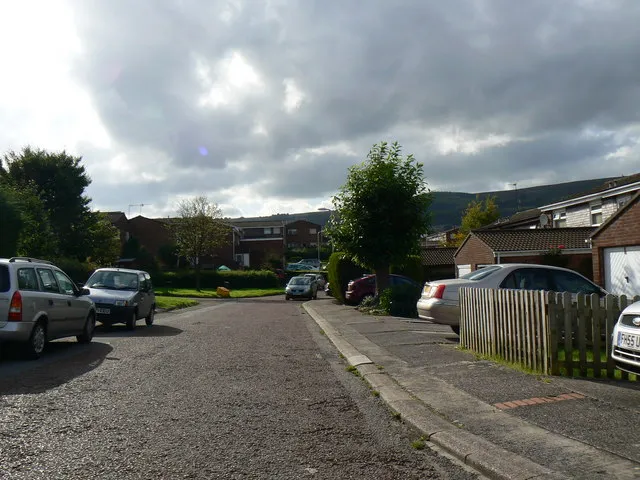
Continue towards Victoria Road, then take the footpath that links the residential streets with the quieter edge of town. Here the route changes character. The bins give way to hedges, the fire escapes to garden fences. You can hear a kettle, a dog, a radio. On a dry day it is a pleasant loop; after heavy rain, wear proper shoes and expect the odd puddle doing its best impression of a pond.
This is where the back lanes do their most useful work. They knit together streets that look separate on a map. They give people a way to walk to the shops without following the traffic. They make the town feel smaller in the good sense.
The bits people miss
Walk slowly and you will notice the small stuff: a boot scraper by a door, a faded sign painted directly onto brick, a gate that has been repaired so many times it is more patch than gate. These are not formal heritage attractions. They are the everyday details that survive because nobody has quite got round to removing them.
They also tell you how the town has changed. Service lanes that once carried coal and beer now carry parcels and coffee. Footpaths that were once school routes are now dog-walking routes and pram routes. The geometry stays; the purpose shifts.
A route for a dry 2026 afternoon
This is a loose loop, not a military operation. Allow 45 to 60 minutes, or longer if you stop for a coffee.
- Start: Upper Parade, near the Town Hall.
- Step one: Walk down towards the High Street and take the service lane behind the shopfronts. Follow it to Mill Street.
- Step two: Cross at the crossing and pick up the footpath towards the car parks behind Anchorage Road.
- Step three: Turn right and follow the pavement towards Victoria Road.
- Step four: Take the footpath that links Victoria Road with the estate streets nearby, then loop back via Duke Street.
- Step five: Return through Lower Parade and finish near King Edward Square.
Most of it is paved, but some sections are narrow. It is fine for a sturdy buggy, less fine for a large group. Go on a dry day, keep dogs close, and treat the lanes as the working spaces they are.
What the back lanes teach you
The front street is the shop window. The back lanes are the seams. They are not glamorous, but they are how the town holds together — a hundred small, useful connections that nobody puts on a postcard.
So next time you have four minutes to spare, take the short way round. Nod at the delivery driver. Step around the bins. Look up at the brickwork. Sutton Coldfield is not just its main roads. It is also the thin routes between them, quietly doing the work.