Six Chairs, One Noticeboard: Where Sutton Coldfield Actually Hears the News
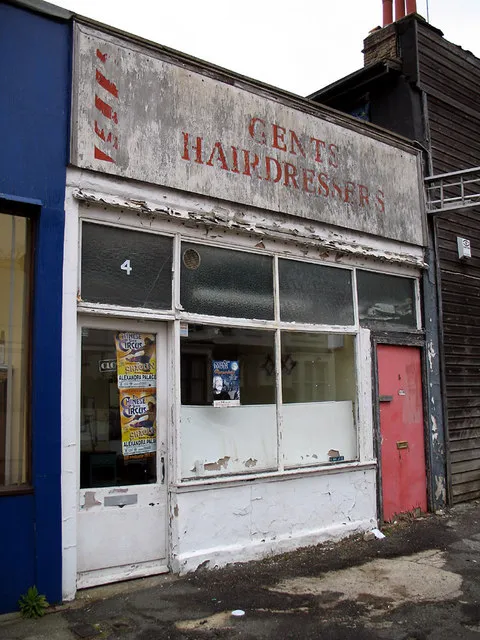
Photo: Martin Addison, CC BY-SA 2.0, via Wikimedia Commons
The first thing you notice is that nobody is talking about hair. Not really. The scissors are moving, the mirror is doing its job, and somewhere between the second and third snip a woman is being filled in on a cat that has gone missing from a road three streets away, complete with a description so precise that half the shop can now spot it in the dark.
This is how a lot of Sutton Coldfield finds out what is happening. Not through a noticeboard pinned to a wall, but through six or seven chairs, each of them with a captive audience of one and a pair of ears that have heard everything twice.
Chair one: the traditional barber's on the corner
Clippers, cold lino, a radio that is never quite tuned. The etiquette here is unwritten but absolute: you sit, you say roughly what you want, and then you shut up unless you have something worth saying. The man with the scissors has opinions about the traffic, the council and the state of the road outside, in that order.
This is the chair where lost-property appeals get their first airing. Keys, mostly. A glove. A small child's scooter, once. By the time the person has left, the shop has pooled three possible sightings and one wayward theory.
Chair two: the salon with the school-gate crowd
Friday morning, mid-week, right after drop-off. This is the busiest intelligence hub in the building, and the reason is simple: everyone in the chair is within four streets of each other's lives. School uniform swaps happen here. So do warnings about the pothole at the top of the road and recommendations for the only plumber who answers his phone.
A good salon does something subtle with this. It does not gossip so much as circulate. There is a difference, and everyone in the chair knows it.
Chair three: the barber who does the whole family
Every town has one. A man who has cut the grandfather's hair and now cuts the grandson's, and who asks how the daughter is getting on at the school that closed its car park last term. This is the closest thing Sutton has to a census. He does not need to ask the year group. He remembers.
It is also where people ask after other people, which is a small thing and not a small thing at all. 'Tell your mum I was asking.' That sentence travels further than you would think.
Chair four: the salon that keeps a proper noticeboard
Some hairdresser's chairs come with a cork board by the till: a card for a dog walker, a card for a piano teacher, a card for the thing that happens in the church hall on the second Tuesday. Half the town's smallest clubs are still running because of these boards.
What makes it work is that the owner prunes it. Nothing older than a month unless it is still true. It is a small, thankless act of curation, and it is the reason the card you pin there actually gets a phone call.
Chair five: the one in a back room, for the weekly set
The older customers, the ones who come in on the same day at the same time, and who are not really there for the cut. The chair is comfortable. The kettle goes on. The conversation covers the bus timetable, the heating, and a long-running disagreement about whether the road was better before they changed it.
You would call it a social club if the scissors were not involved. It is where the town's oldest and most accurate information lives — who has moved, who has passed, which shop used to be where.
Chair six: the one that opens late
Because not everyone works office hours. A late chair catches the people who finish at seven and cannot get to anything else — and that group is always the hardest to reach with local news. In half an hour with a pair of clippers, they will be told about the roadworks, the good takeaway, and the fact that the car park behind the shops is free after six.
How a story actually travels
It goes like this. Something happens on a Tuesday. Someone mentions it in a chair on the Thursday. Someone else in the chair happens to live opposite, and knows it was actually Wednesday, and that it was fine. By Saturday the correction has been made twice over, and the version that survives is more or less true, mostly, and considerably more fun.
That is not a failure of accuracy. It is a small editorial process, and it is happening every day within a hundred yards of the high street.
The etiquette of the chair
Because it is worth saying: there are rules.
- What is said in the chair stays broadly in the chair. Facts travel; specifics get softened.
- Advice is welcomed. Verdicts on people's choices are not.
- If someone asks after a family, they mean it. Answer properly.
- If you know something is wrong, say so gently. The town runs on corrections.
Speed has its place, and a phone can tell you a bus time in four seconds. What it cannot do is tell you that the woman two doors down is fine, that the cat came back, or that the last pair of glasses was found on the windowsill at the shop where everybody checks. That comes off a chair, out of a mirror, and into the town.