A Light That Moves: Three Sutton Tales for the Week After Christmas
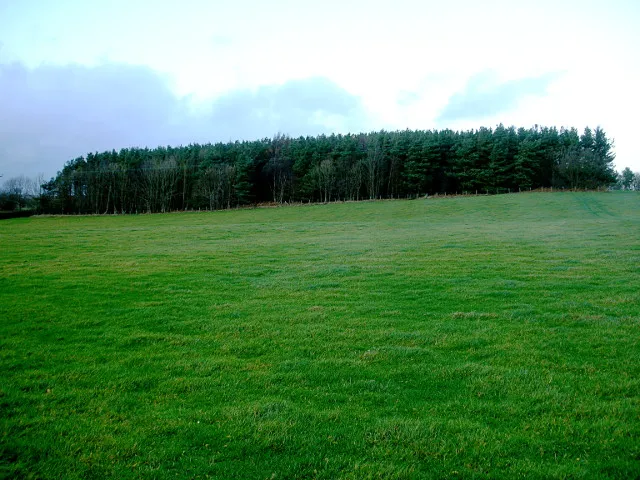
Photo: Andy Waddington, CC BY-SA 2.0, via Wikimedia Commons
There is a particular week in the year — the one with no name, the one between the last of the turkey and the first of the resolutions — when Sutton Coldfield gets very quiet. The shops are half-shut. The car parks are empty. Darkness arrives before half four and the streetlights hum.
It’s the week people tell stories in. Always has been.
Why this week, of all weeks
Folklore has a name for it in other places: the hinge of the year, the dead days, the time out of time. Whatever you call it, the ingredients are the same — long nights, short days, a lot of households with an empty chair at the table and a bit too much time to think.
So here are three tales that circulate around Sutton, offered the way they should be: not as facts, but as things people say. I’ve tried to sort what’s genuinely old from what’s a decent story told well in a pub, and I’ve been honest where I can’t tell the difference.
One: the walker on the lane
The first is the simplest and, oddly, the one that turns up most often. A figure on a lane on the Walmley side of town, always at dusk, always walking away from you. Never closer, never further. You turn a corner, or a hedge, and it’s gone.
There are dozens of versions. In some the figure wears a coat; in others it’s just a shape. In nearly all of them, the walker is heading somewhere specific — a gate, a stile, a house that was pulled down long ago.
What makes this one interesting is that it isn’t grand. There’s no headless horseman, no wailing. It’s a person, going about their business, on a lane that used to be the way to somewhere and now isn’t. Half the footpaths around the town are like that: old routes between farms and mills that got swallowed by housing and left as a stripe of tarmac between two fences.
A retired archivist I spoke to, who has lived in the town since the 1970s, was cheerfully sceptical: “People see a dog walker in a long coat at four in the afternoon in December and their brain does the rest. But I’ll tell you what’s true — those lanes were busier than they are now. There was a whole life on them. Some of that feeling stays.”
Two: the light over the wet ground
The second tale is the one that gets retold most, because it has the best props: a light that moves across the park after dark.
Accounts vary on colour and size. It drifts, apparently, low over the ground, and it doesn’t move like a torch — no swinging, no bounce. It goes out and comes back somewhere else.
Before anyone reaches for the supernatural, it’s worth saying that Sutton Park is a genuinely strange place to be after dark, and a genuinely old one. It was a medieval deer park, enclosed and managed for centuries, and before that the Romans ran a road straight through it — Icknield Street, still a long, ruled line under the leaf litter, still walkable in parts. Ground that has been used that continuously does not feel empty at night.
The sensible explanations are good ones. Wet ground near the pools gives off marsh gas, and marsh gas can glow. Headlights from the Chester Road swing across a wet path and look like something floating. Deer move, and a deer’s eyes catch a light and throw it back. There are torches, and there are people who shouldn’t be in there after the gates are shut.
But every explanation needs someone to accept it, and a lot of people would rather keep the light.
Three: the room that smells of coal
The third story is the quietest and, to my mind, the best. A house on the edge of town, rebuilt in the 1960s on the footprint of an older cottage. Nothing dramatic ever happens there. No cold spots, no rattling chains. Just, occasionally, in one back room, the smell of coal smoke — sharp, sudden, and gone.
There is no fire. There is no chimney in use. The house has been central-heated since before anyone living there was born.
The family who told me about it aren’t the sort to make a fuss. They mentioned it the way you’d mention a dripping tap. And that, honestly, is how most local hauntings work: not as horror, but as a small domestic oddity that a household gets used to and eventually finds slightly reassuring.
History or pub talk?
Most of what circulates as Sutton ghost lore doesn’t survive a visit to the records. Names get attached to the wrong centuries, a Victorian vicar becomes a Tudor one, and a “monk” turns out to be a rumour invented in 1974 by somebody’s uncle.
What does survive is the landscape. The lanes, the old boundaries, the pools, the Roman road, the outline of the deer park. Those are real, they are older than anything built on them, and they are why the stories attach where they do.
A short walk before the year turns
If you fancy a bit of atmosphere rather than a fright, keep it simple and safe.
- Park on the road outside the park rather than driving in, as the vehicle gates are locked at dusk and you don’t want to be the person who tests that.
- Start at Blackroot Pool and walk north on the main path for twenty minutes, then turn back the way you came. Around forty-five minutes, flat, and no chance of getting lost.
- Take a torch, wear something visible, and tell somebody where you are going. This is standard advice, not spooky advice.
- Walk in the last of the light rather than in full dark. Dusk is where the stories live anyway.
And if you see a light moving where a light shouldn’t be, you are welcome to decide for yourself what it is. That’s the whole point of the week between Christmas and New Year: for a few days, nobody is in a hurry to explain anything.